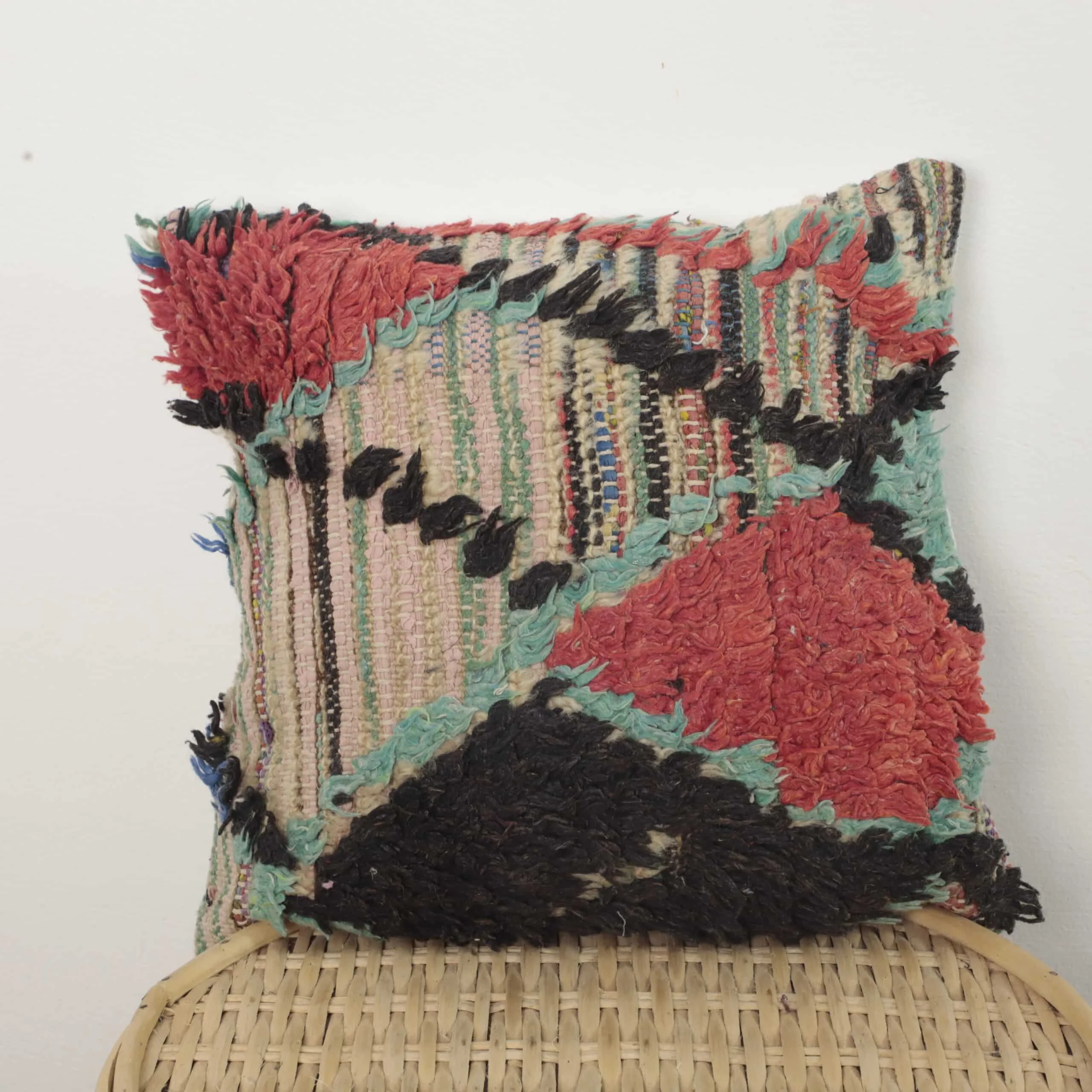
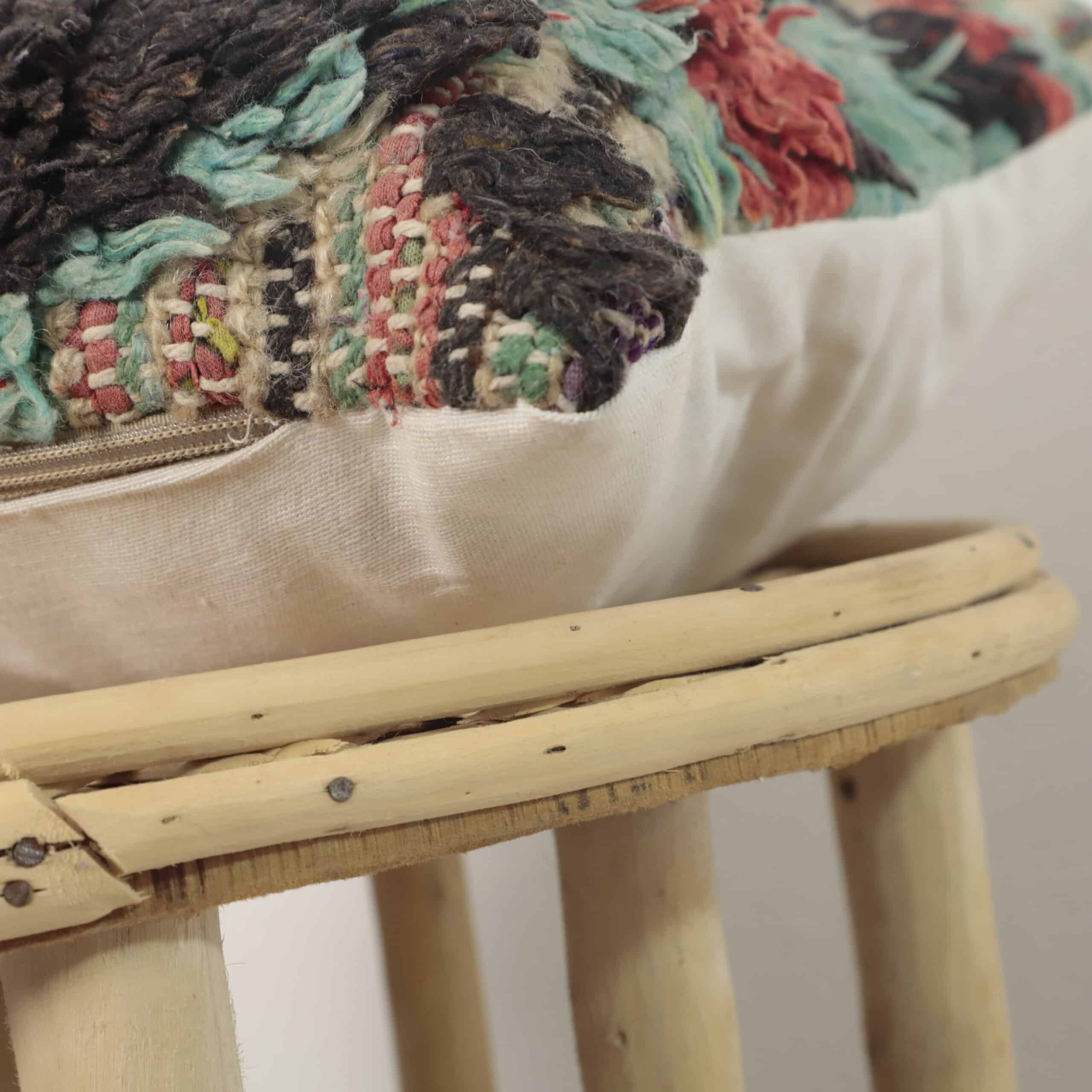
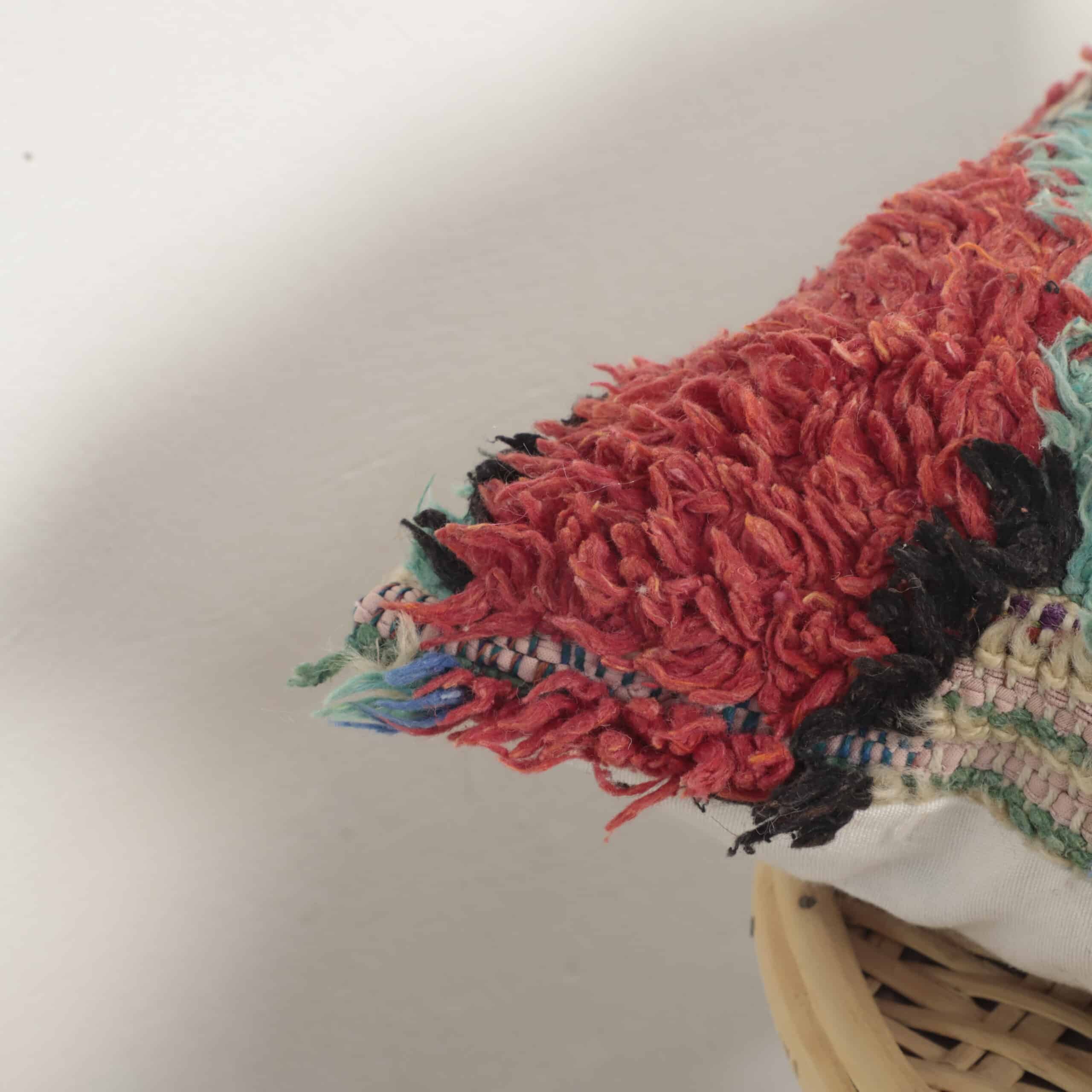

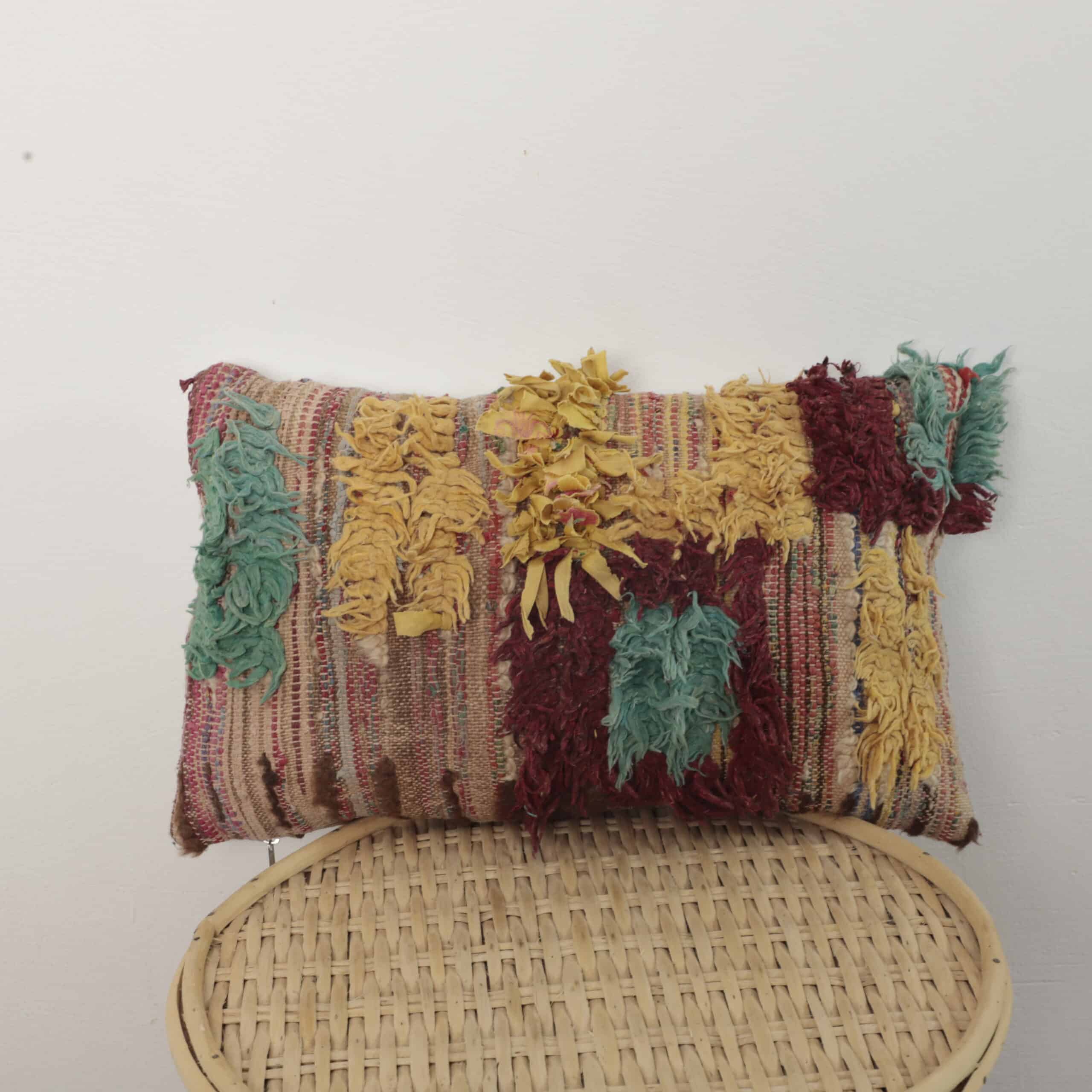
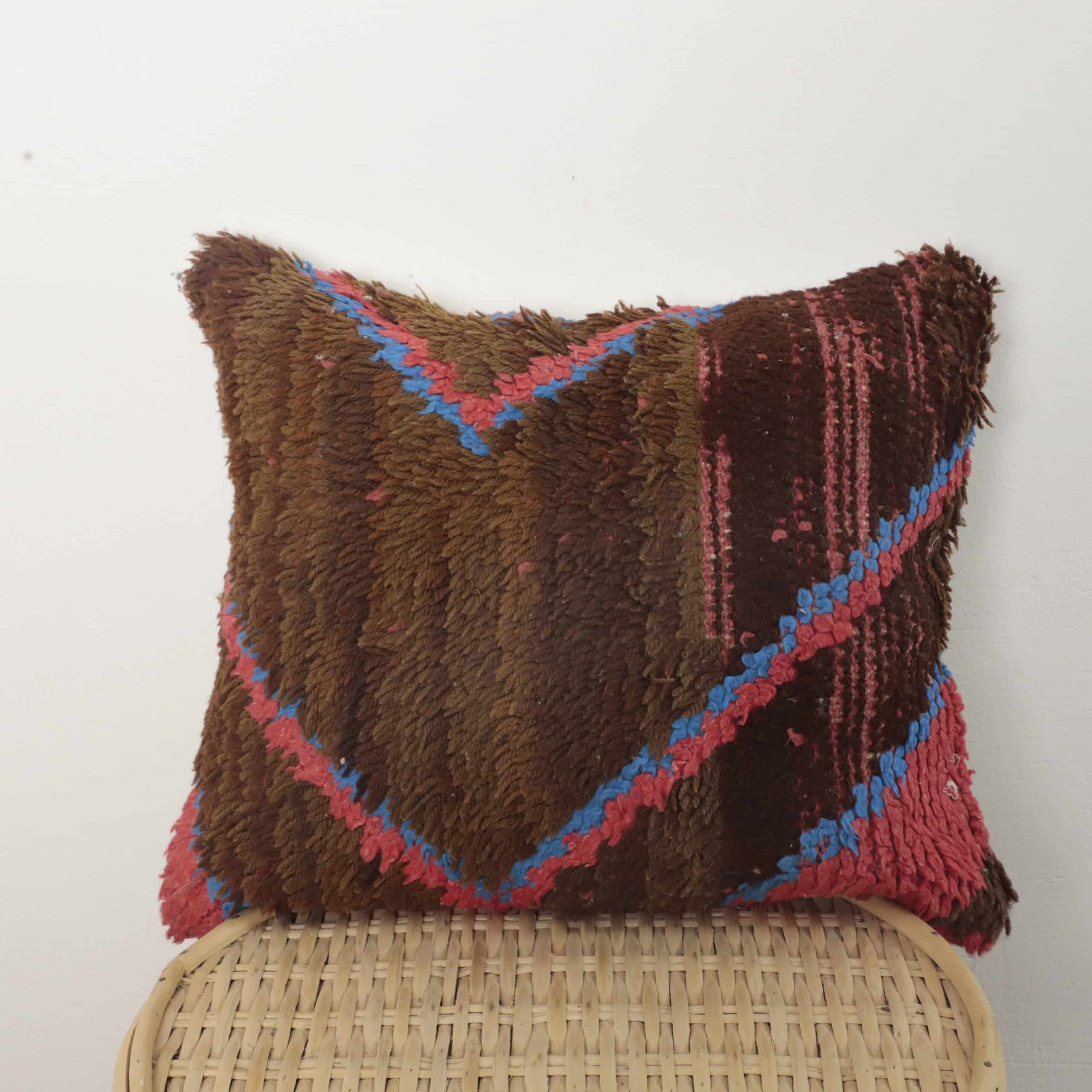
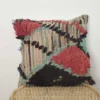
This 39×36 cm boucherouite Moroccan pillow uses a textile tradition distinct from every other cushion in the store. Boucherouite — the Arabic term meaning “a piece torn from used clothing” — refers to a Berber weaving practice where artisans cut strips of recycled fabric and weave or knot them into a structured textile. No virgin wool. No uniform yarn. Each strip of material carries its own weight, texture, and color from its prior life as clothing or household textile.
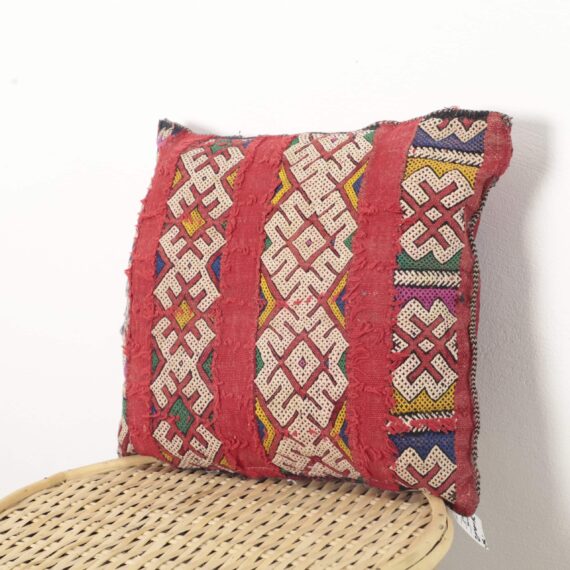
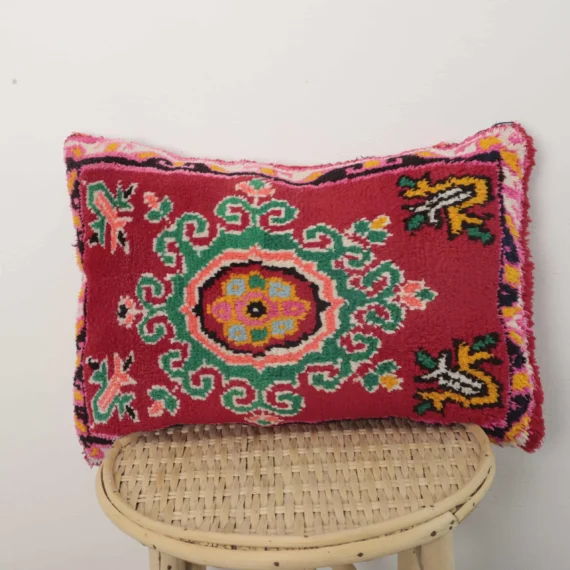
Berber women in rural Morocco developed the boucherouite technique as a practical response to wool scarcity. Over time it became a recognized Amazigh art form, producing textiles with a multi-textural surface and an unpredictable color composition that handspun wool simply cannot replicate. The color range in this cushion — red, mint green, peach, black, and cream — comes from the source fabrics used, not from a dye plan. The palette is assembled rather than designed.
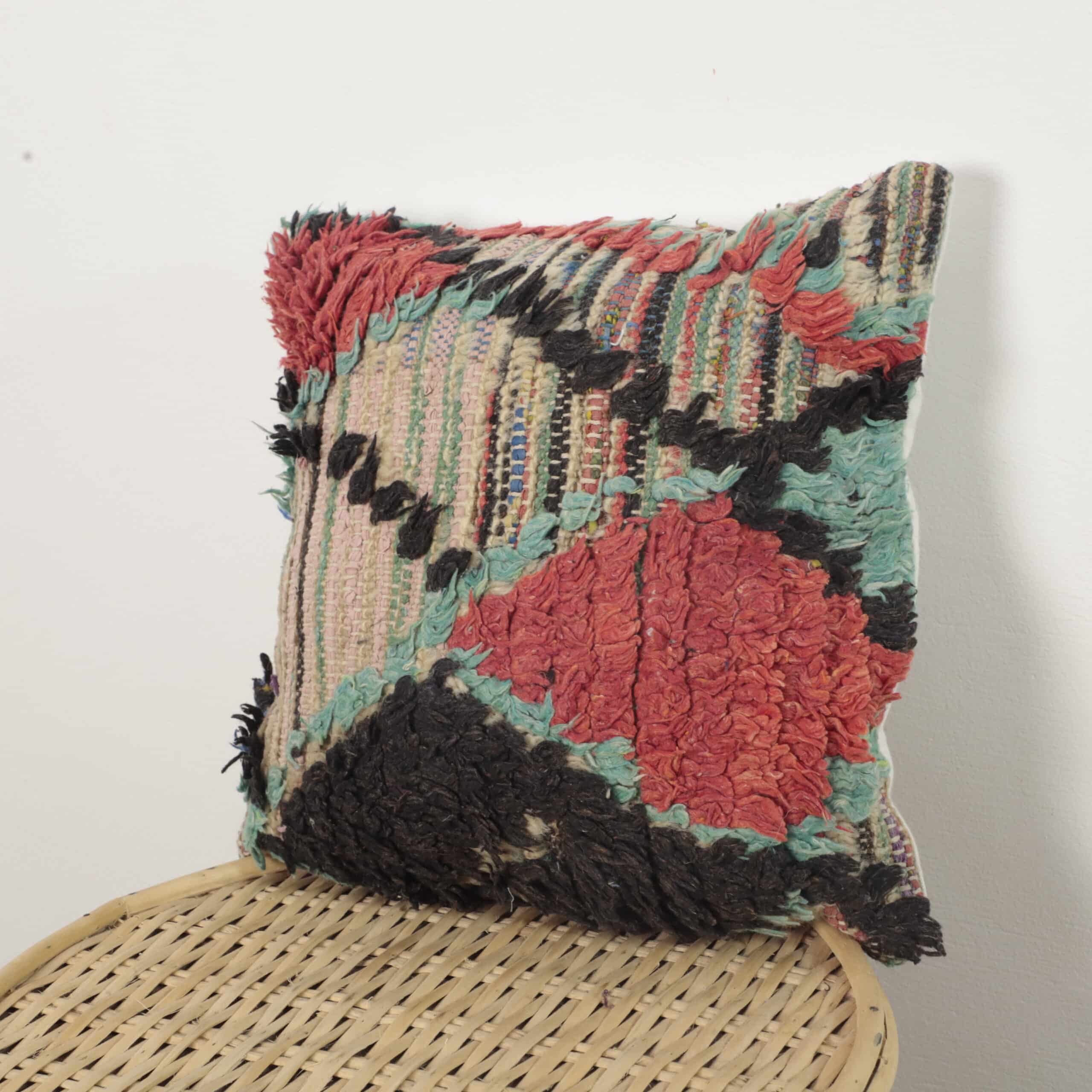
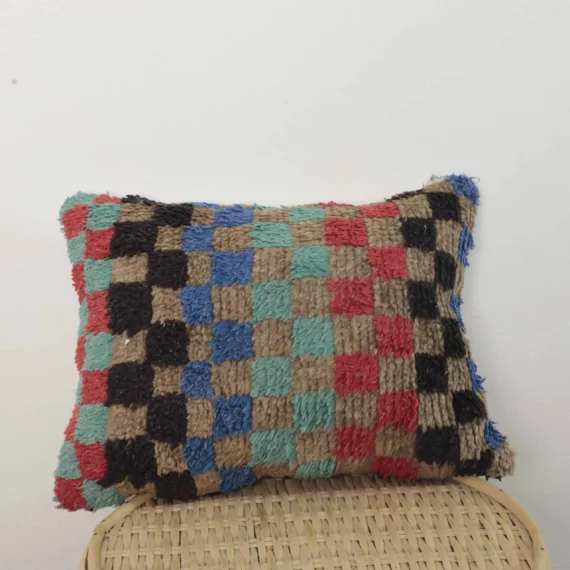
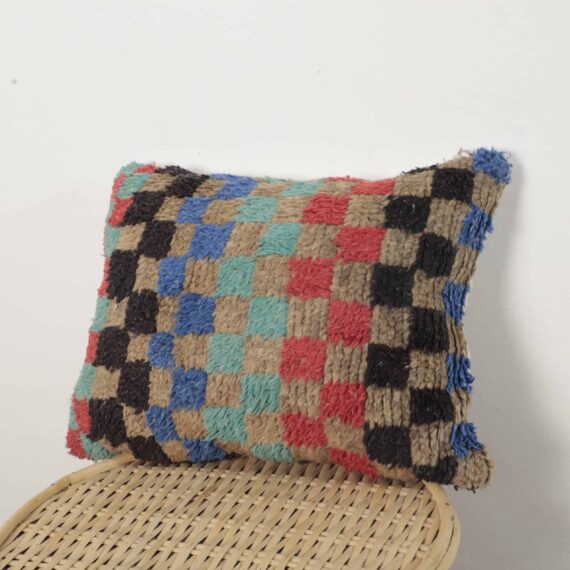
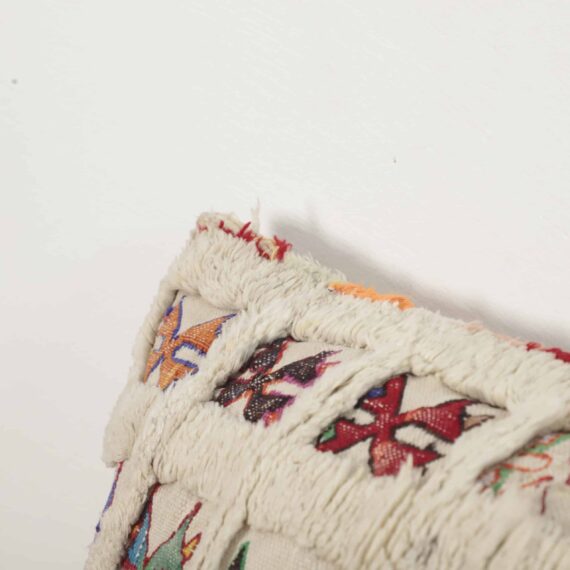
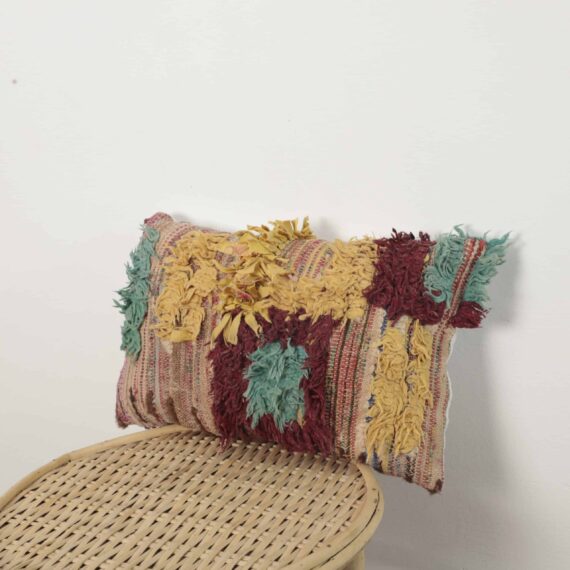
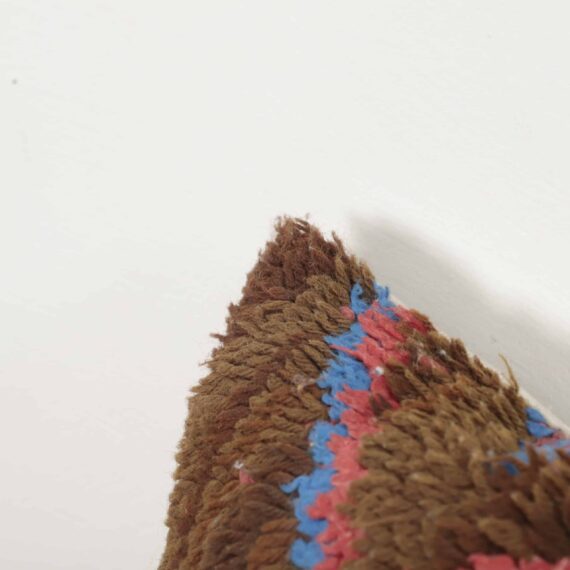
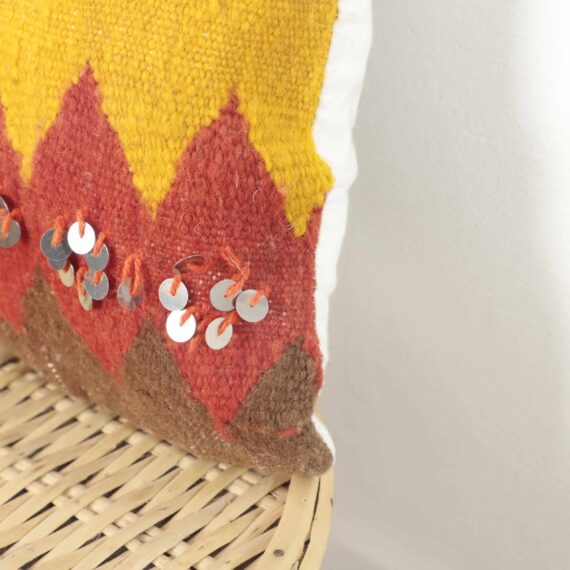
The surface of this 39×36 cm cushion mixes flat-woven and textured tufted sections. Some areas sit level with a kilim-style flatweave density. Others rise into a short pile formed from looped or knotted recycled fiber strips. The contrast between flat and raised sections gives the surface visual movement and tactile variation across a single piece.
At 39×36 cm, this cushion works as a statement accent on sofas, reading chairs, and eclectic multi-cushion arrangements. It pairs well with solid neutral textiles — raw linen, plain cotton, natural wool — where its color range and mixed texture hold the visual focus without competition.
Browse the full Moroccan Pillows collection at Moroccan Rug Area — all handmade in Morocco and shipped worldwide.
Key Features
- Size: 39×36 cm — near-square accent format, fits sofas, chairs, and eclectic arrangements
- Material: Handwoven boucherouite — recycled cotton and mixed fabric strips, no virgin wool
- Colors: Red, mint green, peach, black, and cream — palette assembled from recycled source fabrics
- Technique: Traditional Berber boucherouite method — recycled fabric strips woven and knotted on a loom
- Texture: Mixed surface — flat-woven sections alongside raised tufted pile areas
- Origin: Handmade in Morocco by Berber artisans, shipped directly from source
- Sustainability: Fully recycled material base — no new fiber production required
- Variation: Color range and surface texture vary between pieces — each cushion is singular
- Shipping: Free worldwide delivery
Why Choose This Boucherouite Pillow
Every other cushion in the Moroccan Pillows collection starts with wool or cactus silk fiber. This one starts with used clothing. That difference matters both in terms of material origin and in terms of what the surface does visually.
A wool kilim cushion draws its color from dyed yarn processed before weaving begins. The weaver works with a planned palette. A boucherouite cushion draws its color from whatever fabric strips the artisan assembles. Red comes from a strip of red cotton fabric. Mint green comes from a lightweight knit or woven garment in that tone. The color composition of each piece reflects the material available at the time of production — not a standardized palette repeated across a production run.
This means no two boucherouite cushions carry an identical color arrangement. The technique structurally prevents it. The artisan assembles a unique set of materials for each piece and weaves them into a one-of-a-kind surface. The mint green strip in one cushion will not appear in the same position — or at all — in the next.
The mixed flat and tufted surface texture also sets boucherouite apart from both kilim flatweave and standard shag pile construction. Boucherouite surfaces carry both in a single piece because the recycled fabric strips behave differently at different points of the weave structure. That variation is not a flaw — it is the defining physical character of the technique.
This cushion suits buyers who want a genuinely singular piece rather than a handmade version of a standardized design.
Follow us on Facebook for new arrivals and styling inspiration.





Reviews
There are no reviews yet.