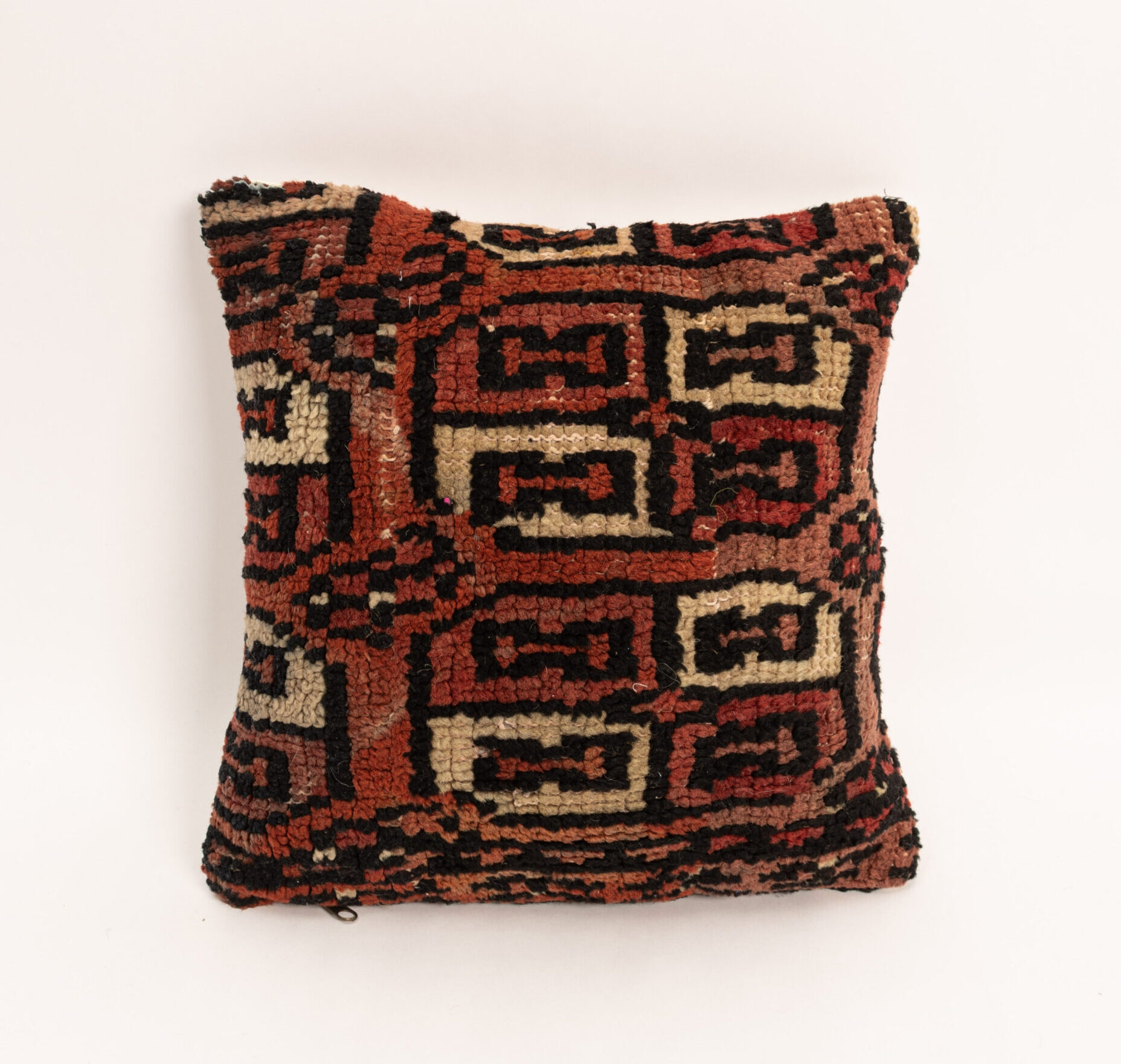
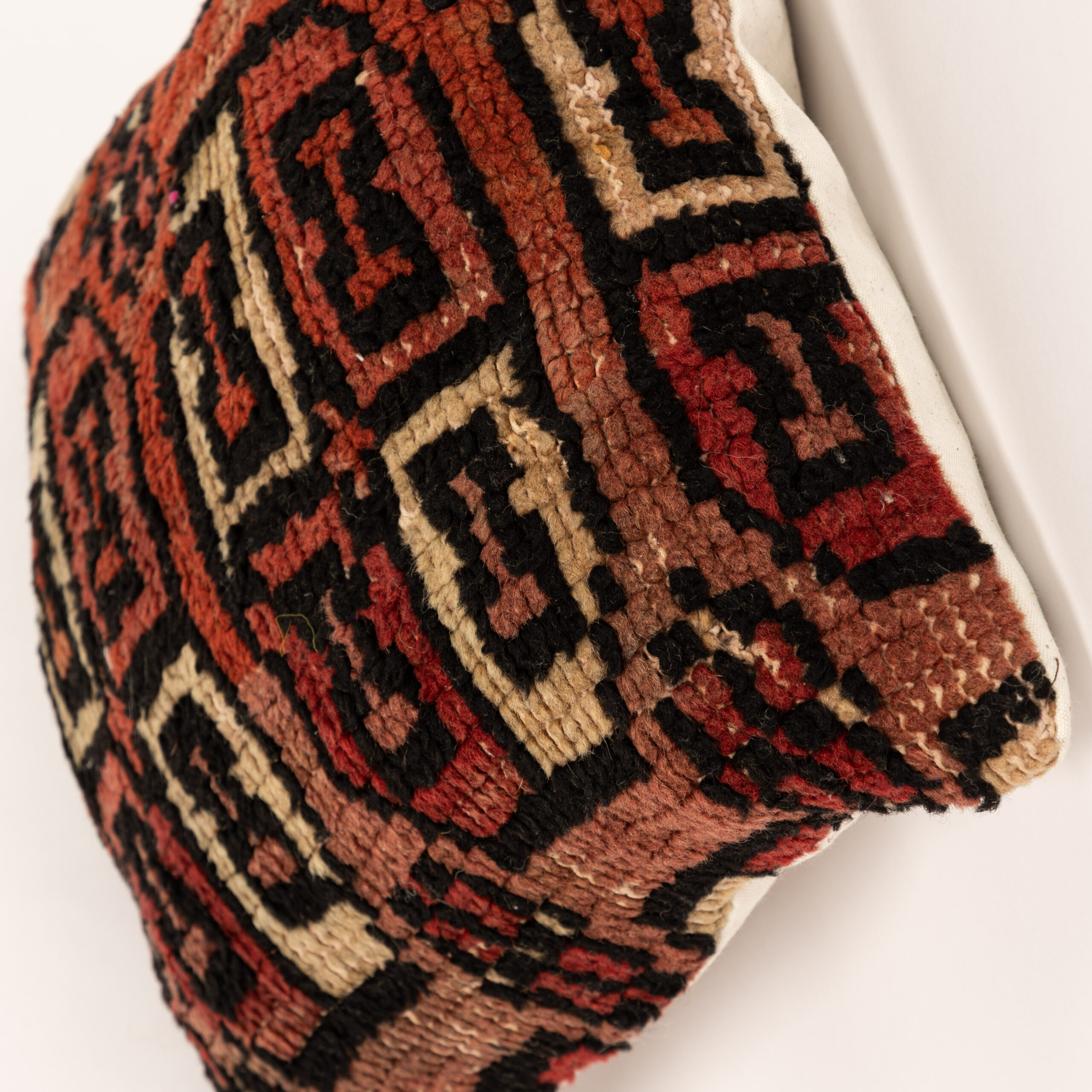
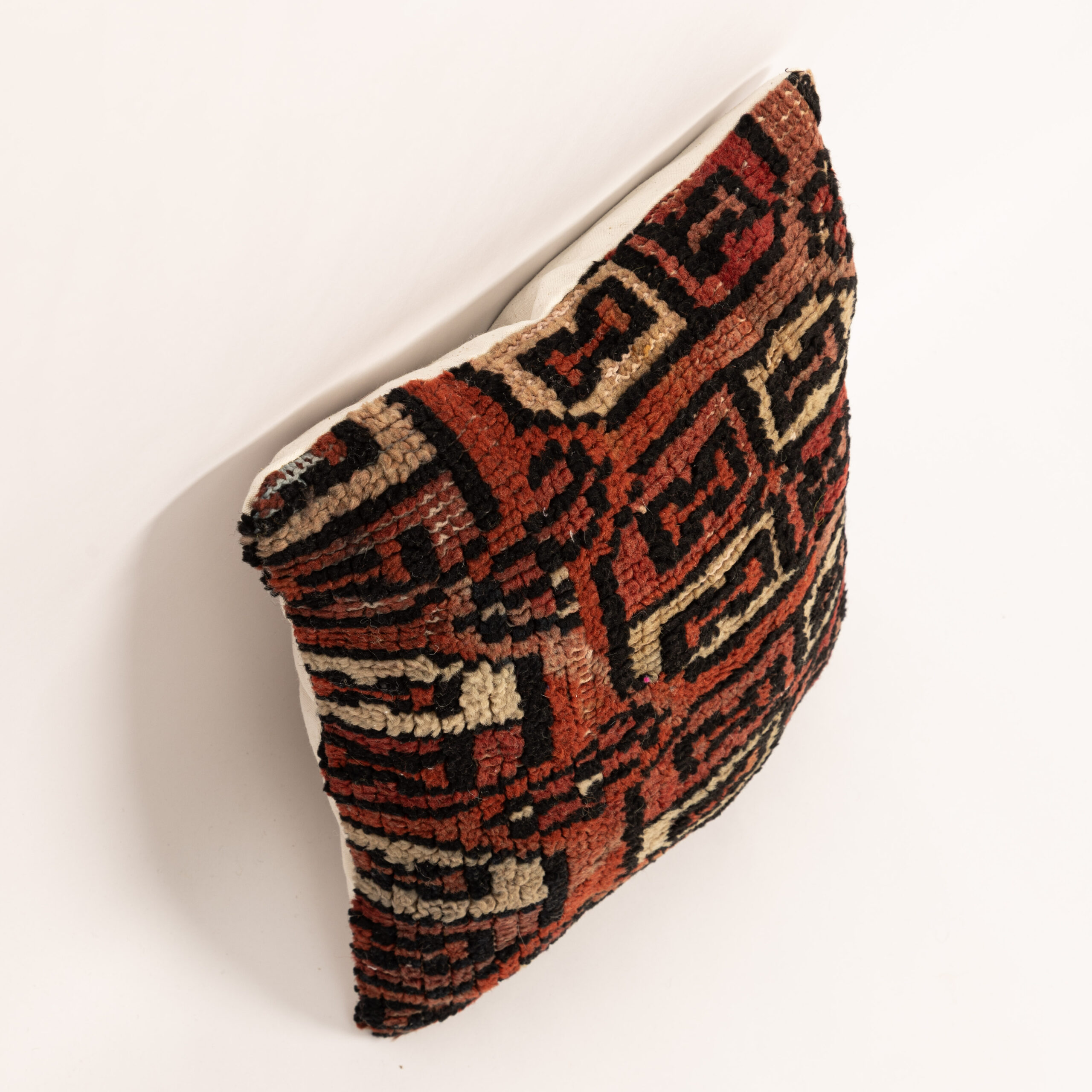
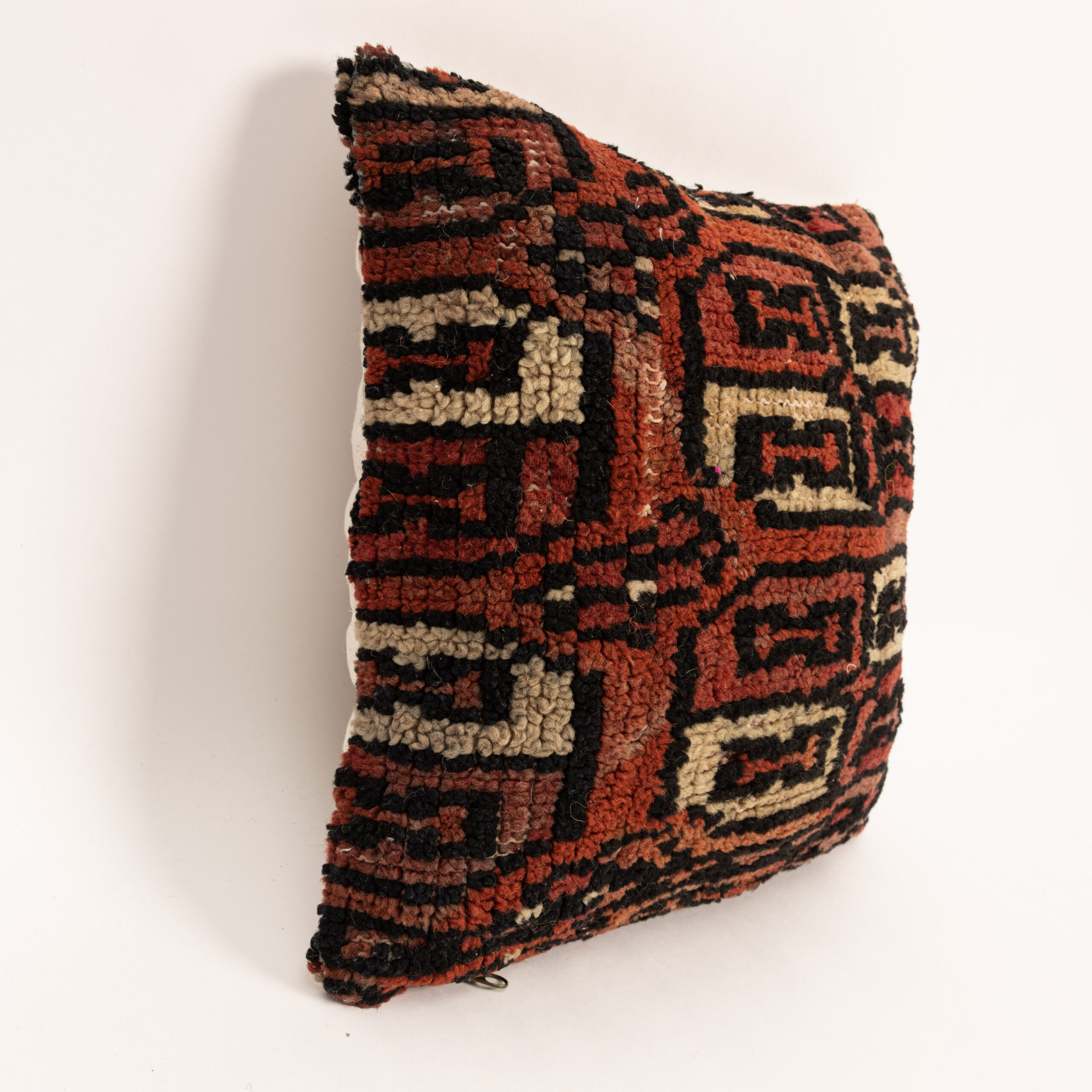
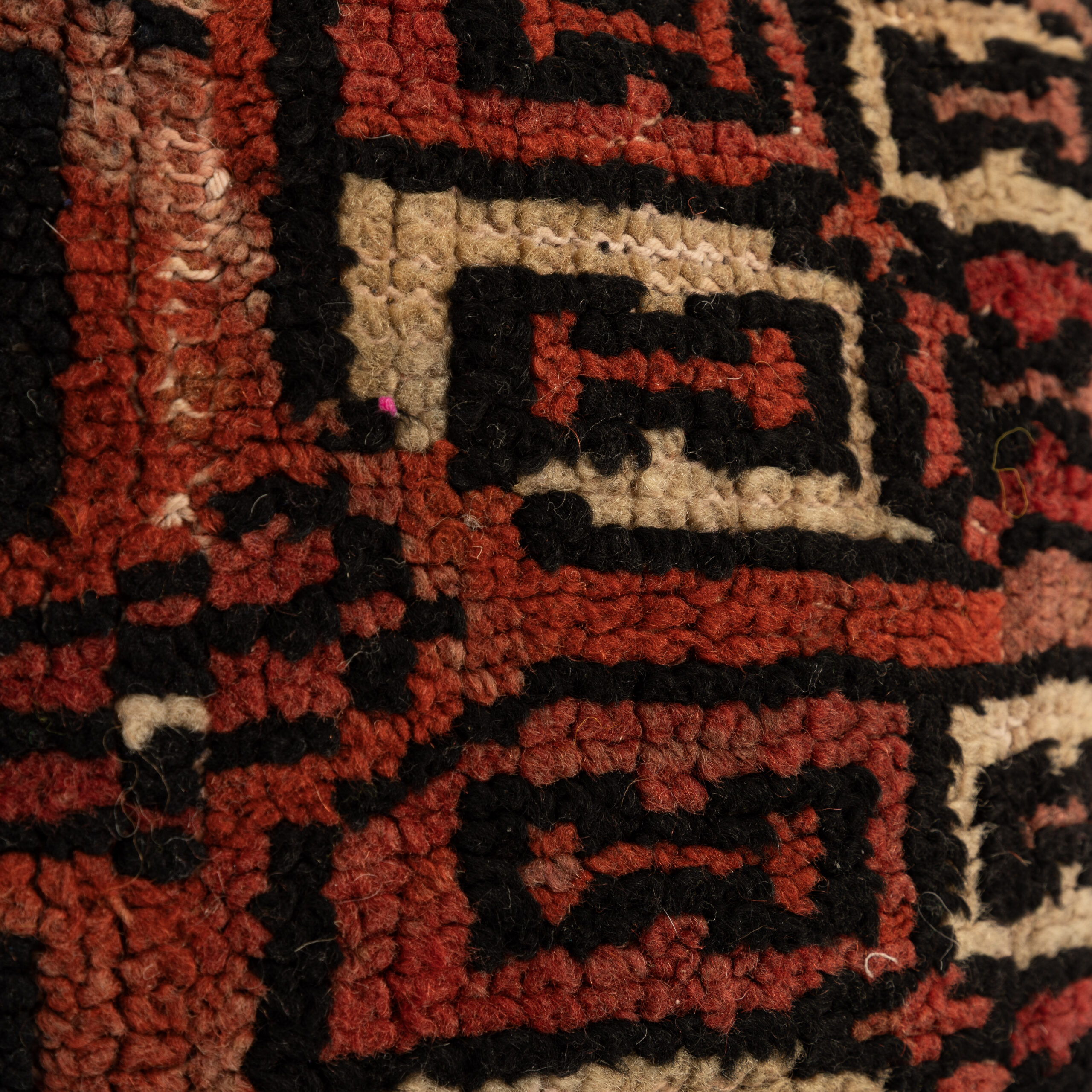
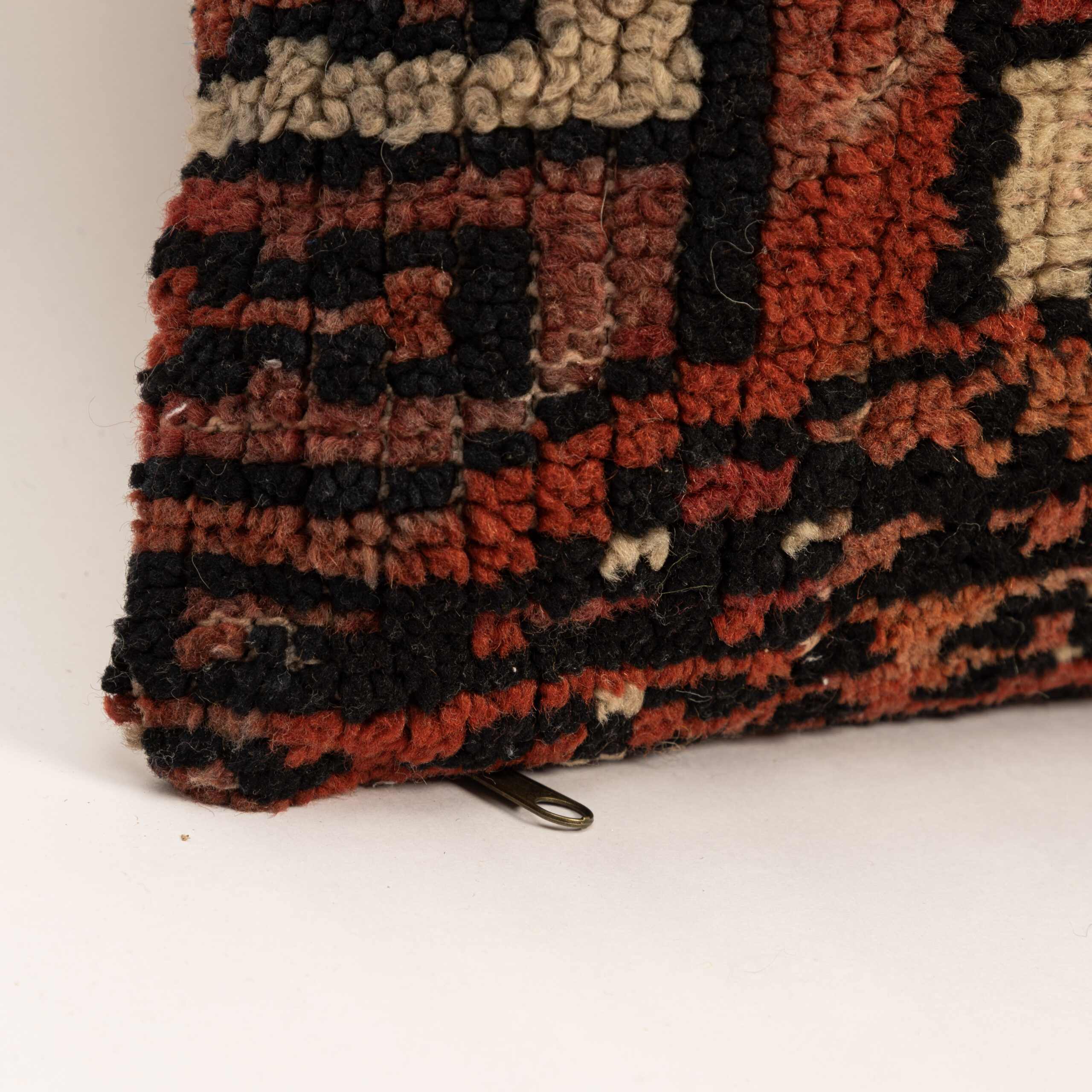
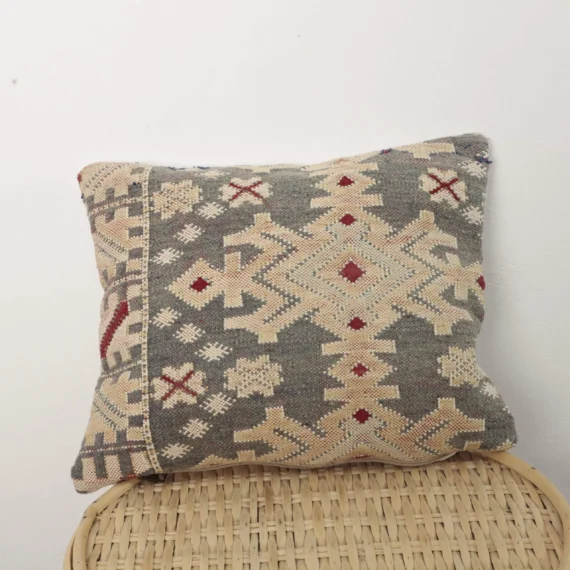
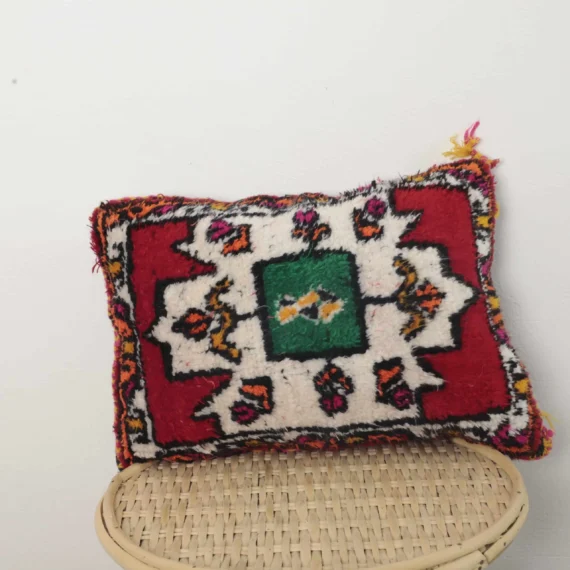
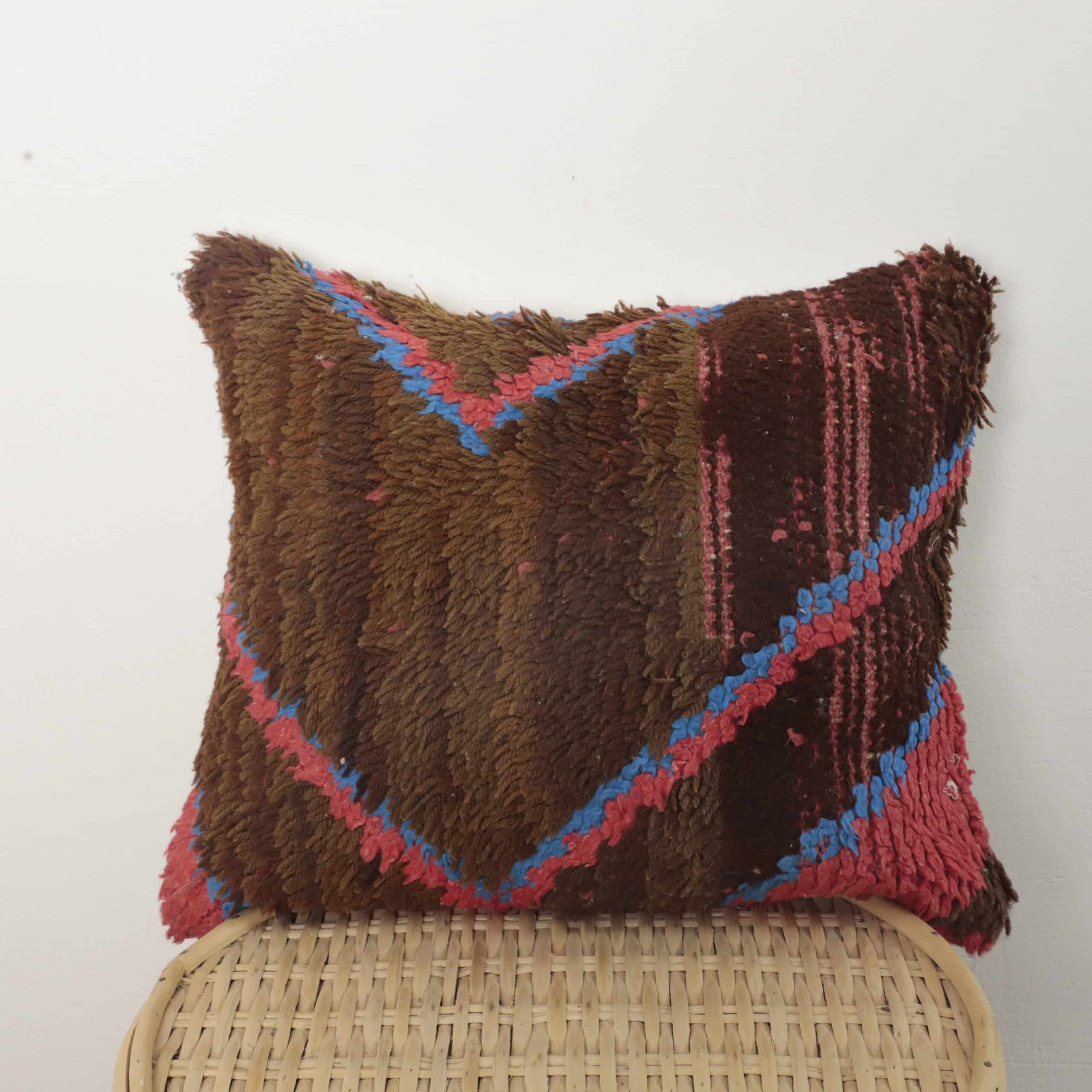
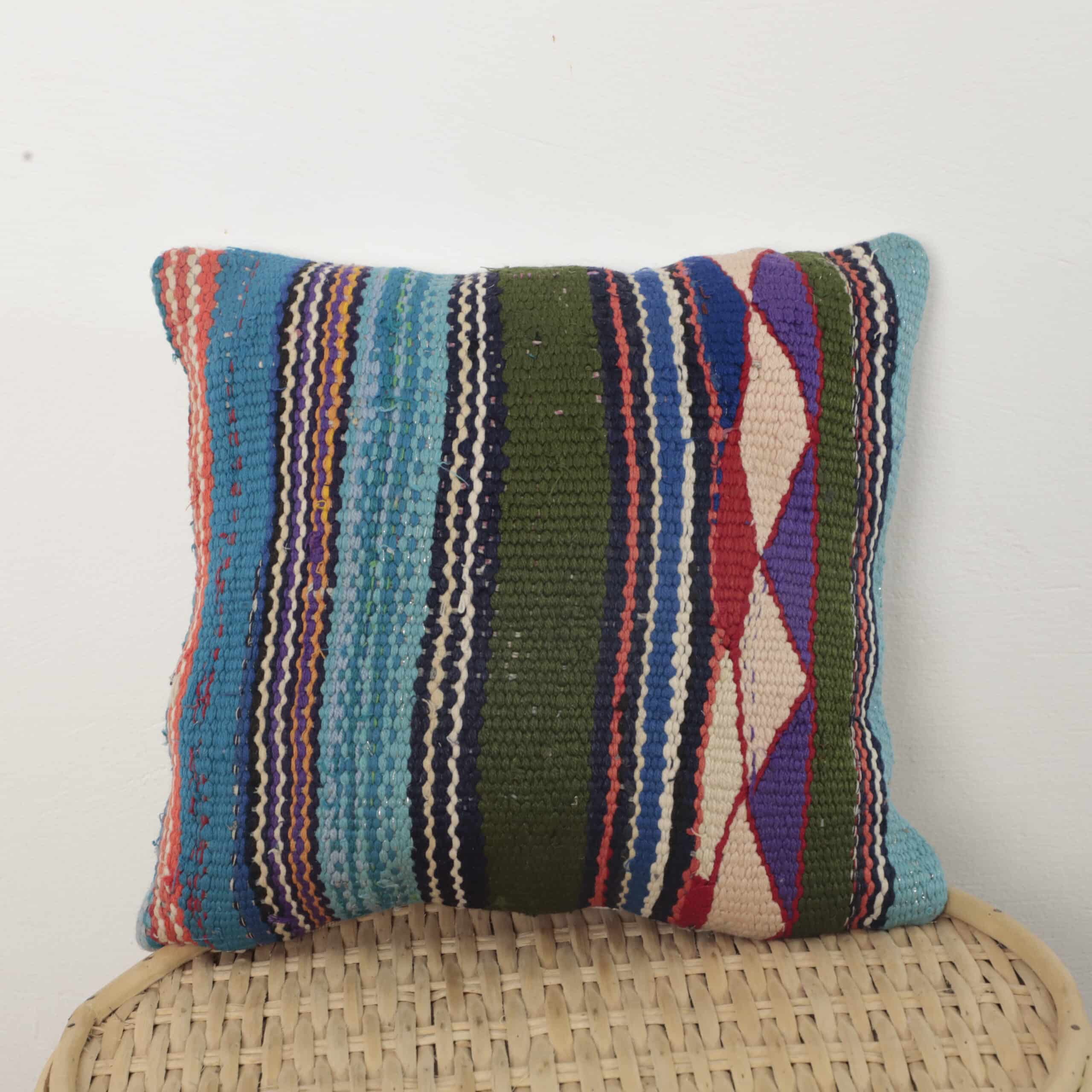
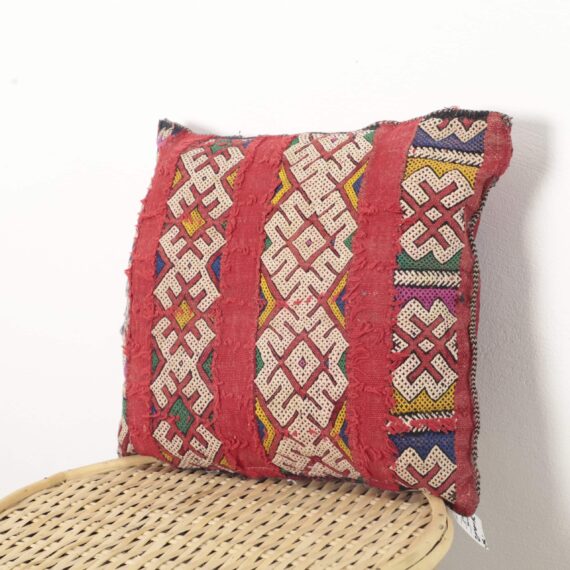
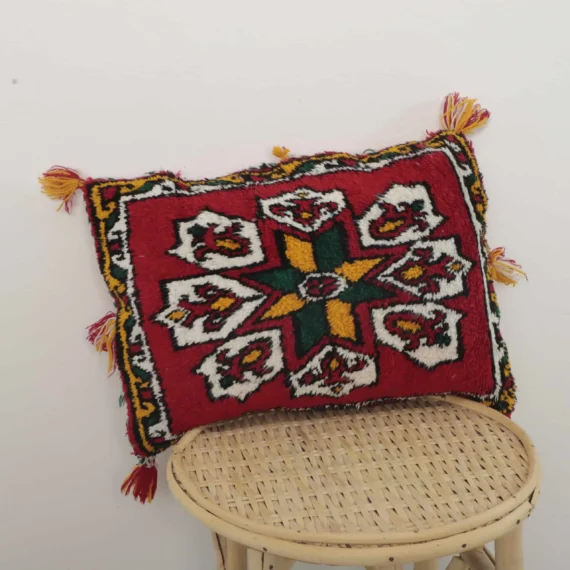
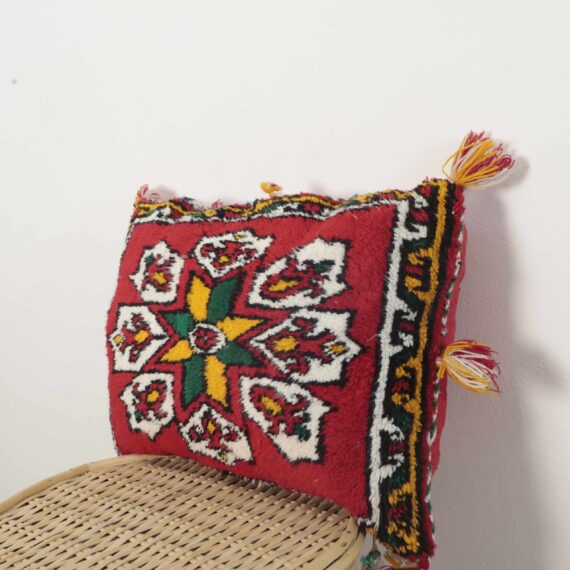
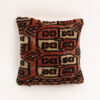
This Moroccan striped pillow starts with raw wool and ends on a hand loom somewhere in rural Morocco. Berber weavers build each cushion row by row, pulling thread across a fixed warp in a rhythm refined over decades. The process takes time. The result shows it.
Stripe patterns in Berber textile work are not decorative choices. They carry regional identity. The width, color order, and spacing of each stripe connect to specific weaving communities across the Atlas Mountains and the Souss Valley. This cushion carries that lineage. Its colors — earthy ochres, deep reds, faded indigos — come from dye traditions that predate synthetic pigments.
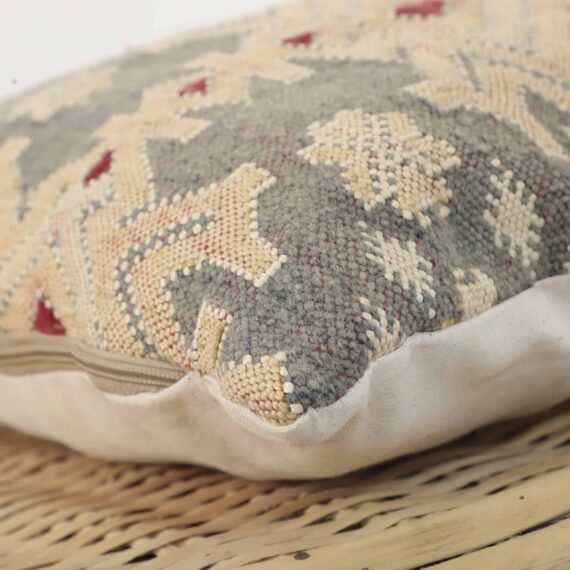
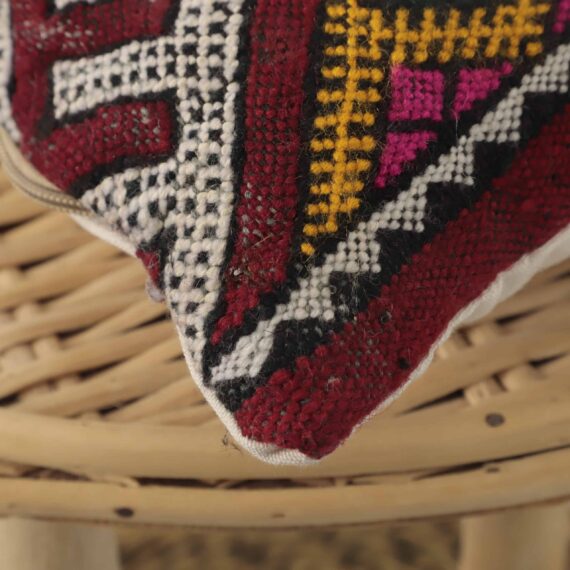
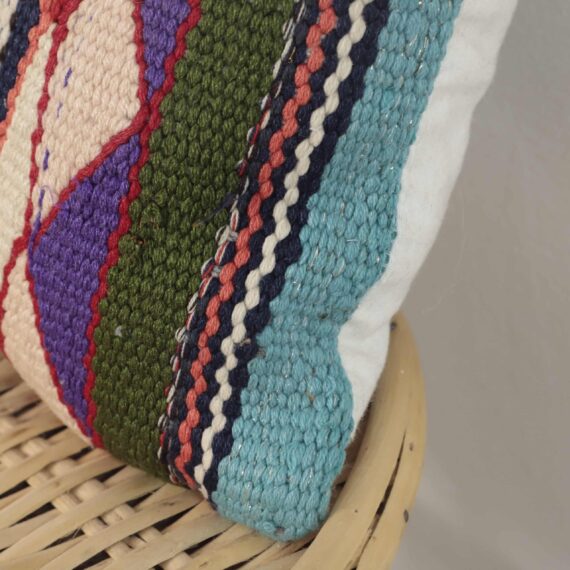
The weave structure is tight and flat, similar to a kilim ground. This keeps the surface smooth, resistant to piling, and easy to spot clean. The cushion holds its shape under daily use. Throw it on a sofa, stack it with floor cushions, or pair it with a Boucherouite rug for a fully handmade Moroccan interior.
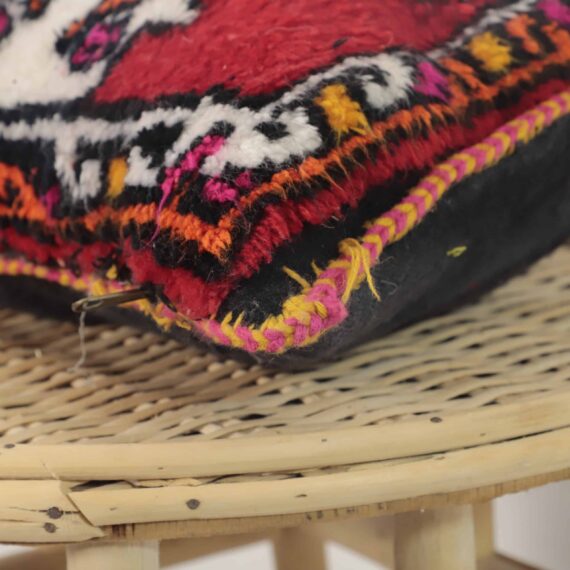
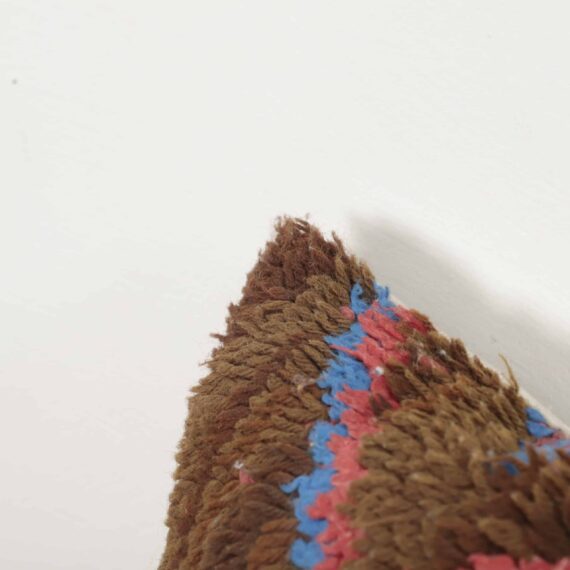
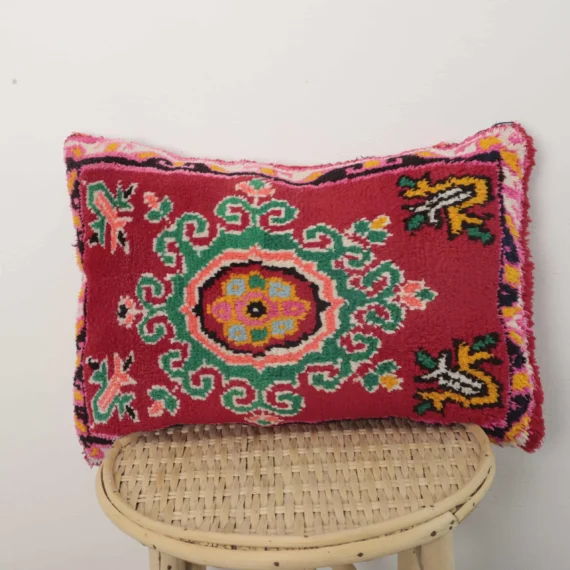
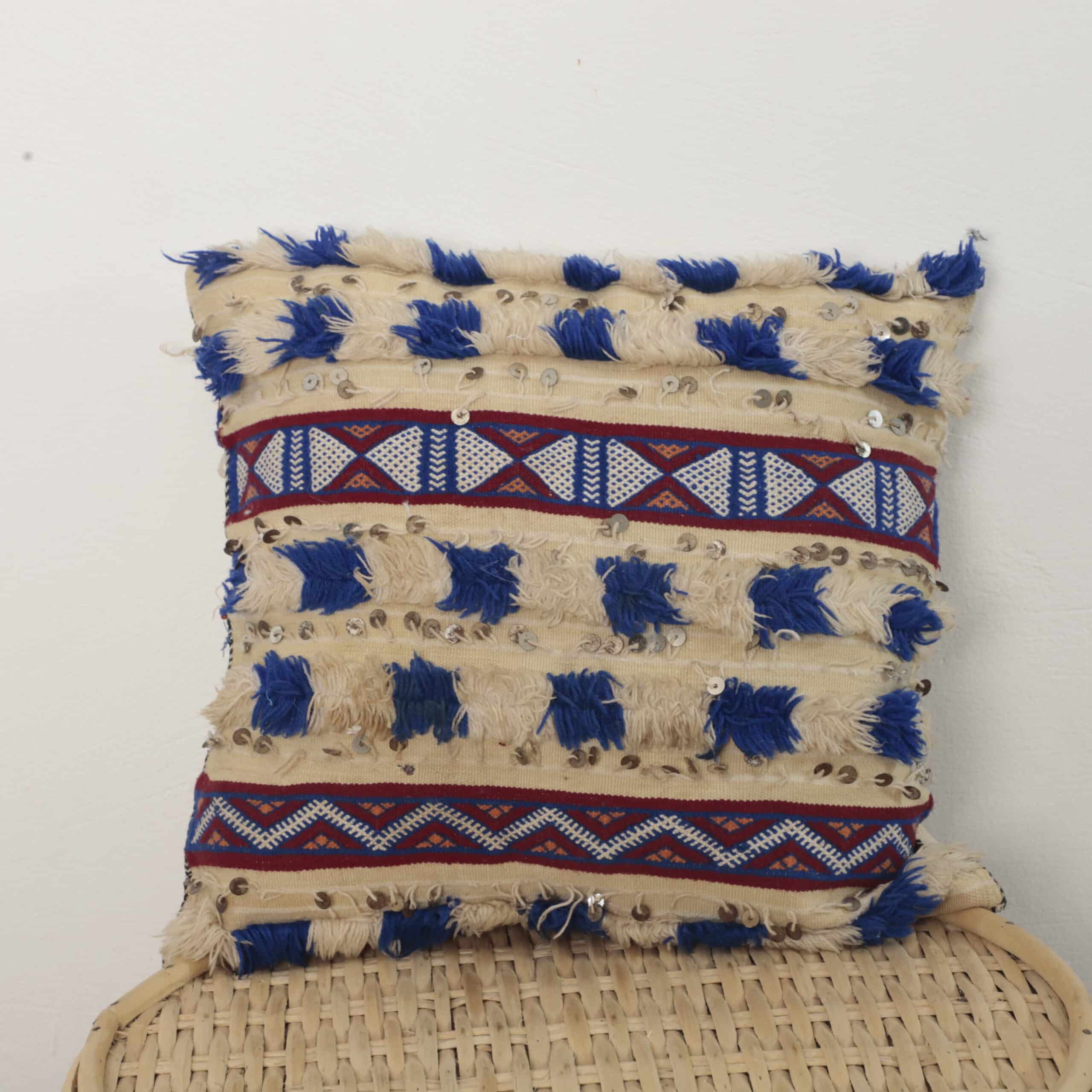
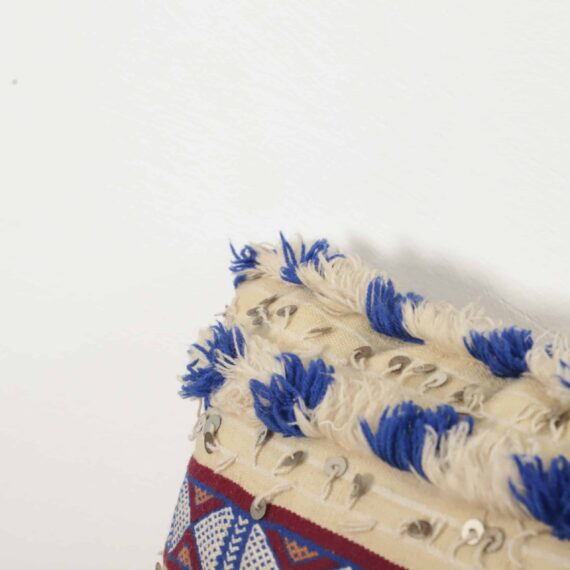
Handmade variation is part of the product. Stripe widths shift slightly. Colors read differently under natural versus artificial light. Every piece is singular.
Browse the full handmade collection at moroccanrugarea.com to find rugs, cushions, and home textiles that work together.
Key Features
- Hand-loom construction — each cushion woven by skilled Berber artisans in Morocco
- Tribal stripe pattern — reflects authentic regional weaving traditions of the Atlas and Souss communities
- Natural wool fiber — dense, durable, and colorfast through extended use
- Kilim-style flatweave — smooth surface, no pile, easy to maintain and spot clean
- Earthy color palette — ochre, red, indigo, and cream tones drawn from traditional dye practice
- One-of-a-kind piece — handmade variation in stripe spacing and tone makes each cushion unique
- Multi-use format — suits sofas, floor seating, reading nooks, and layered textile setups
- Ships direct from Morocco — full chain of authenticity from artisan to door
Why Choose This Moroccan Striped Pillow
Factory cushions copy Berber stripe patterns from a distance. The proportions look right on screen but the material tells a different story — uniform, flat, without texture or depth.
This pillow is the original version. A Berber weaver set the warp, chose the colors, and built the stripe sequence by hand. The wool comes from the same regional sources Moroccan artisans have used for generations. The pattern reflects a living craft tradition, not a trend cycle.
Pair it with other handmade pieces from moroccanrugarea.com — kilim rugs, Sabra cactus silk cushions, or vintage Berber throws — and build an interior with real material character. Mass production fills a room. Handcraft gives it a story.
Follow us on Facebook for new arrivals and styling inspiration.




Reviews
There are no reviews yet.